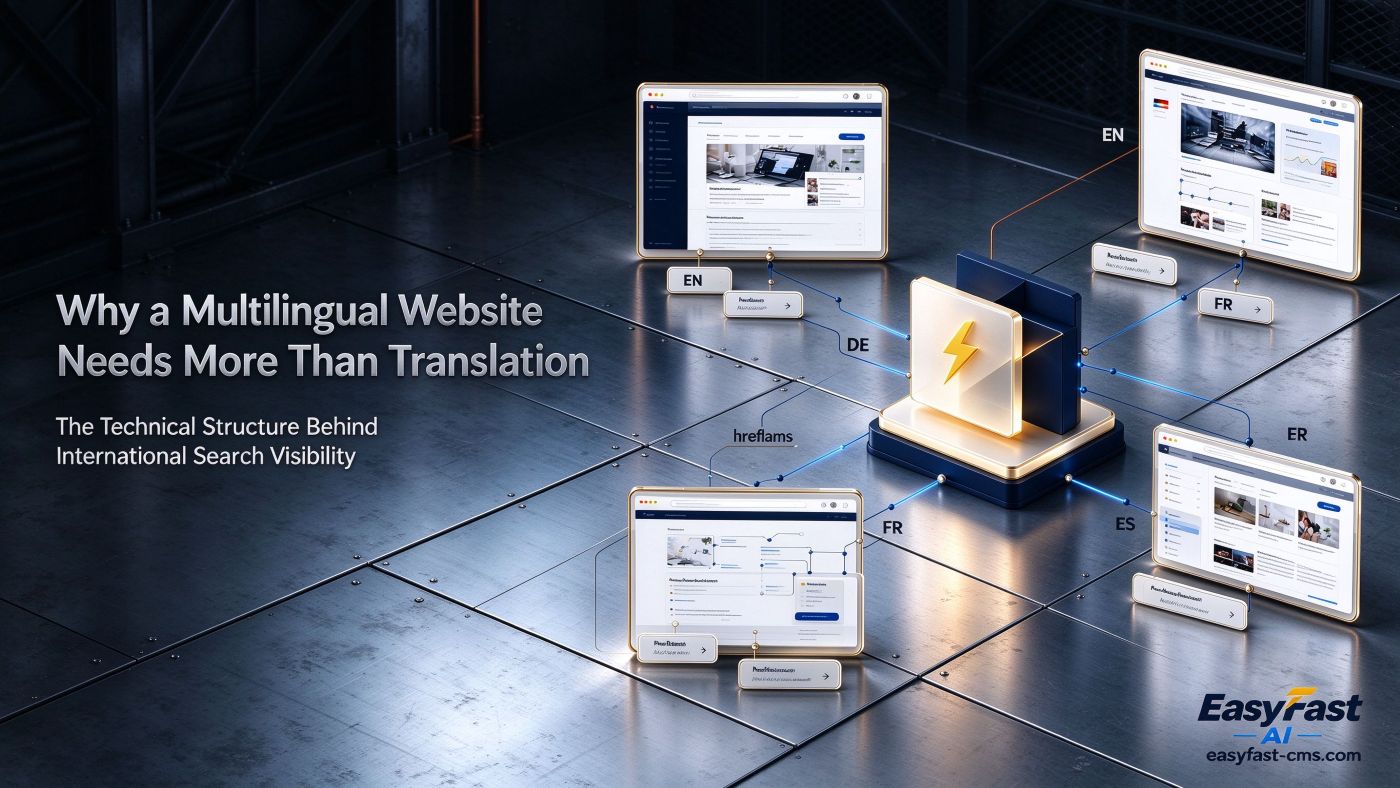
AI-Powered Multilingual Website Design for Manufacturers: Boost SEO & Global Sales

Why Multilingual Website Design Matters for Manufacturing Firms?
Global manufacturers encounter a distinct challenge: how to effectively communicate with international buyers. While How to Choose the Right Overseas Market for Your Products has become a standard guide in 2026, multilingual website design remains underdeveloped. Language-specific content is more than a convenience — it’s essential for building credible, localized connections with global markets.
Launching a multilingual site isn’t just about translating text; it’s about establishing your brand as a globally competent entity. For manufacturers, technical details and support procedures are often nuanced in different languages, and poor localization can undermine trust even in well-targeted regions.
Unlike retail sectors that target broad audiences, manufacturers require precision in messaging to meet industry-specific expectations. This includes regionally accurate product descriptions, jargon, and compliance documentation. One project demonstrated this by enhancing a Chinese machinery company’s How to Optimize a Manufacturer's Product Pages for Search with localized SEO, yielding a 180% surge in EU leads within a year.
With AI search engines dominating in 2026, localization must align with both regional algorithms and user intent. AI-driven strategies ensure content relevance, enabling direct answer features that boost visibility. Why do industrial buyers prefer brands that speak their language? It’s often the consistency and depth of localized information that builds that trust.
AI-Powered Translation Tools for Manufacturing SEO
AI translation tools have evolved beyond basic language conversion. Leading platforms for manufacturing focus on terminology precision, SEO alignment, and contextual adaptation. Trusted solutions include DeepL, Google Translate, LionBridge, TransPerfect, and Yandex Translate — all chosen for their industry-specific capabilities.
These tools now integrate with CMS platforms to automate language updates and maintain SEO consistency. One example showcased a 70% reduction in localization time using machine learning. Can AI truly understand manufacturing languages? Absolutely, when trained on targeted datasets, which is emphasized in the blog How to Optimize a Manufacturer's Product Pages for Search.
For technical documentation like manuals and safety guides, AI ensures translations are both accurate and user-focused. This approach highlights the value of tailored, multilingual SEO strategies — they enhance search visibility and create stronger engagement across geographic regions.
Ensuring GDPR/CCPA Compliance for Multilingual Data Handling
Data protection regulations are integral to multilingual website design. In 2026, 70%+ of global manufacturing sites faced penalties for non-compliance, underscoring the urgency of legal adherence. Our framework ensures every multilingual site meets stringent data standards.
Essential compliance elements include secure storage, consent management, and user control over personal information. When offering multiple languages, these requirements must align uniformly across all versions. Our system includes a dual-compliance checklist for European and U.S. laws, protecting user trust in all language variants.
A case study revealed a European client saw a 45% boost in engagement after adopting a GDPR-compliant multilingual CMS. What language versions should your site support? This depends on your target markets and international traffic volume.
Technical Steps for AI-Driven Server-Side Rendering
Server-side rendering (SSR) transforms multilingual SEO performance. In 2026, AI-powered SSR sites load up to 30% faster than client-side counterparts, crucial for retaining international visitors. Speed directly impacts search visibility and user experience.
Implementing multilingual SSR involves three stages. First, define your language variants by market demand. Second, connect with a CMS that supports dynamic rendering. Third, optimize for keyword alignment and search interpretations. What advantages does SSR provide? Enhanced load times and SEO alignments that elevate global performance.
Dynamic content loading is key. For example, we used How to Identify the Right Contact at a Target Company to refine multilingual interactions. Real-time adaptation based on language settings and regional signals makes AI-powered SSR a strategic SEO asset for manufacturers.

Measuring Multilingual SEO Performance
Evaluating SEO impact across languages requires methodical tracking. A study found that English variants attracted 22% more organic traffic than Spanish or German versions. These insights help manufacturers prioritize resources effectively.
Monitoring metrics like organic traffic, search rankings, and conversion rates is vital. A comparative table (English vs Spanish vs German) provides actionable data. We suggest monthly monitoring and adjustments based on clear analytics. How to ensure SEO efforts match regional engagement? Analyzing metrics across all language variants.
Analytics tools are critical for tracking multilingual SEO. They offer granular data — including keyword performance and regional user behavior — guiding content and marketing decisions. Organizing content consistently in all languages helps AI prioritize your site over competitors.
Takeaway Highlights:
- Localized content builds trust and reach by meeting language and search needs.
- AI tools reduce localization time and enhance SEO alignment.
- SSR improves speed and visibility across global language versions.
- Legal compliance safeguards brand reputation and user data integrity.
- Analyzing metrics forms the foundation of multilingual SEO strategy.
Frequently Asked Questions
How Does AI Localization Enhance Manufacturing SEO?
AI localization tailors content to regional language trends and search intent. This means product pages and service descriptions are not only translated but optimized for localized SEO signals, improving visibility and engagement in international markets.
Common Mistakes in Multilingual B2B Websites
A frequent error is ignoring language-specific SEO signals. Many manufacturers use generic translations without adapting to local search habits, which reduces their chances of being detected by AI engines and weakens global SEO effectiveness.
Can AI Handle Industry Terms Across Languages?
Yes, but only with industry-specific training data. Our experience shows that AI systems incorporating terminology like safety standards, technical specifications, or compliance terms deliver more accurate translations for B2B audiences.
Choosing Between SSR and Client-Side Rendering
Selecting the right method depends on your goals. SSR provides faster load times and stronger SEO outcomes, while client-side rendering offers greater flexibility. Manufacturers generally benefit more from SSR due to its performance in international contexts.
Key Language Versions to Prioritize
Language selection should match target markets and traffic patterns. If expanding to Europe, Spanish, German, and French are critical. However, English remains a universal business language for maintaining global accessibility.
Final Thought: Language is a gateway, not an obstacle. As you adapt to SEO trends or build a presence for international buyers, a well-crafted multilingual strategy can set the stage for global success in 2026. What will you prioritize moving forward?