What Is a Multilingual Website? A B2B Manufacturer's Guide to Success

What Is a Multilingual Website?
A multilingual website is one that provides content in multiple languages, enabling businesses to reach diverse audiences across the globe. In the context of B2B manufacturing, it’s not just about translating text — it’s about aligning language with intent, ensuring relevance, and optimizing for global search platforms. For a B2B manufacturer, a multilingual website is a strategic tool to increase visibility in multiple markets, as it allows the brand to speak directly to buyers in their preferred language. This approach builds trust, enhances user experience, and ultimately drives better engagement and conversions.
How to Measure the Success of a Multilingual Website?
Whether you're building your first multilingual site or expanding the language offering on an existing one, measuring effectiveness is crucial.
The right metrics help determine which languages are performing well and which require more focus. Language-specific bounce rates can highlight which markets are disengaging, while time-on-site statistics offer insights into the depth of user interaction across regions.
Looking at conversion rates by language audience segments tells you how well your content resonates with specific buyer groups. In one project, we noticed higher conversion rates for some language audiences, which is why performance is reviewed per market.
Also, assess SEO performance by comparing multilingual keyword rankings with those of single-language sites. Tools like How to Optimize a Manufacturer's Product Pages for Search can guide you through this process. Customer acquisition cost (CAC) comparisons by language market will also help you allocate budget where it matters most.
Consistency checks across language versions ensure your brand voice remains strong no matter the region. User behavior heatmaps and session duration analysis are essential for identifying where users are engaging most. Finally, tracking lead-to-close conversion funnel metrics by language gives a clear view of how each market is responding to your content.
Look, you don’t need to have a multilingual website in every language at once. Start with the most critical ones for your market strategy.
| Metric | Definition | Importance |
|---|---|---|
| Bounce Rate | Percentage of users who leave the site after viewing only one page | Indicates content relevance and user engagement |
| Time-on-Site | Average duration a user spends on the site | Reflects how much users are actually consuming your content |
| Conversion Rate | Percentage of visitors who take a desired action | Measures effectiveness of language and content targeting |
| SEO KPIs | Keyword rankings, backlink equity, and local search visibility | Determines how your content ranks in different markets |
| CAC Per Language | Cost to acquire one customer in a specific market | Highlights cost efficiency and ROI per language segment |
| Content Consistency | Assessment of alignment across language versions | Ensures brand messaging remains cohesive and authentic |
| Lead-to-Close Funnel | Metrics tracking the conversion path from lead to client | Measures the effectiveness of multilingual lead generation |
Here's the thing: every language has its own search preferences. So, while a multilingual website may improve global reach, it also requires a tailored strategy to ensure your content is optimized for the right keywords and local search algorithms.
What Does Language Detection Mean on a Multilingual Website?
Language detection, whether based on geolocation or user preferences, is a core part of the multilingual website meaning in B2B contexts.
Performance of your language detection method can affect both SEO ranking and user experience. For example, in one case, we noticed IP-based geolocation was less accurate than user preference detection for buyers in non-English-speaking countries. That can reduce engagement in those regions.
There are two main types: geolocation-based detection relies on the visitor’s ISP to determine their native language, while preference-based detection allows users to select a language manually. Both approaches have pros and cons, and the choice depends on your audience and the region you're targeting. How to Choose the Right Overseas Market for Your Products is a resource that can help you tailor your multilingual strategy accordingly.
Google and other major search engines use different mechanisms — some are based on browser language, others on cookie history. Both can have inconsistencies, especially when users have multiple profiles or access from different regions. Hybrid language detection systems can help improve accuracy by combining both data sources.
The reality is, if you’re not optimizing language detection, you’re not optimizing your multilingual presence. That’s why we recommend a dual detection system for B2B manufacturers — one based on geolocation, and one based on product or service preferences.
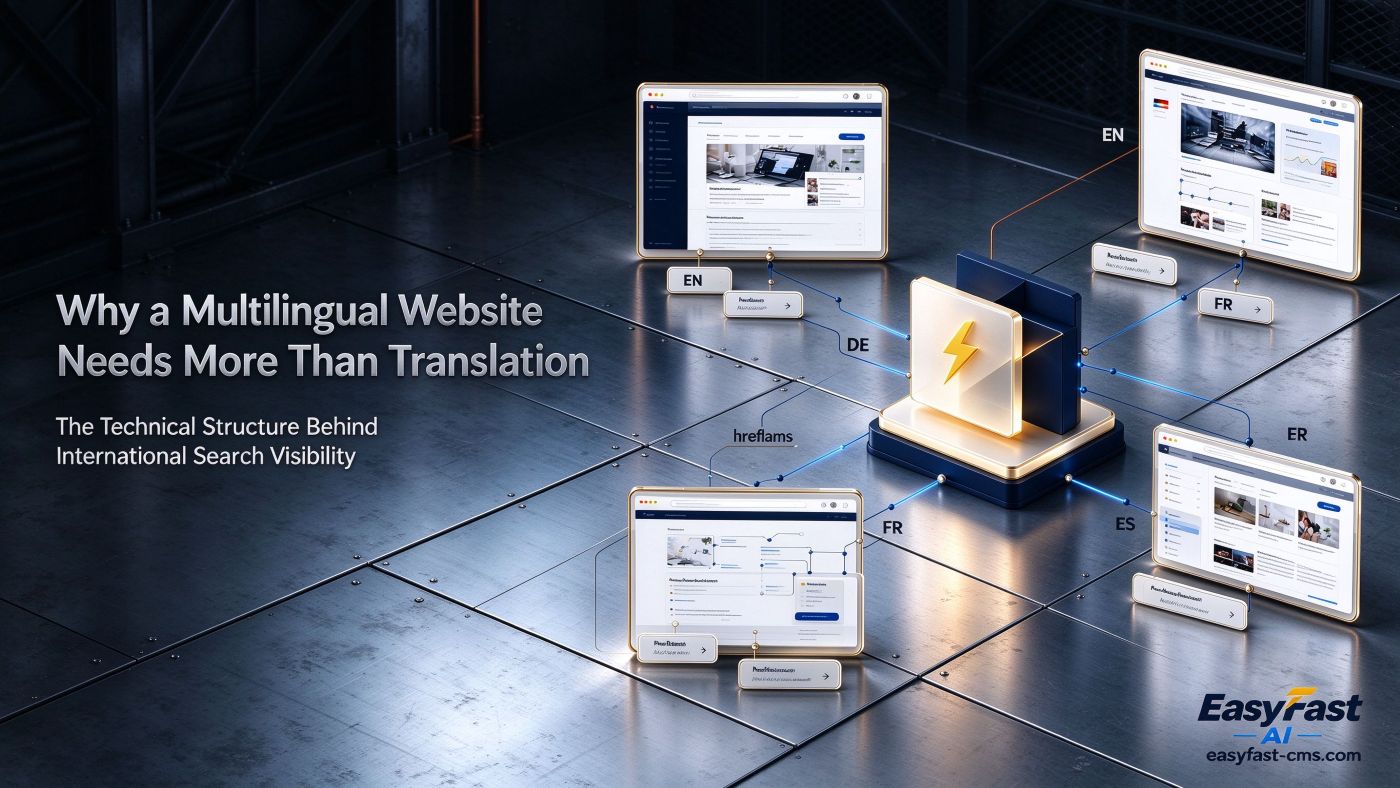
Do you know what the most common mistake is in multilingual SEO? It's not using hreflang tags correctly. These tags are essential for telling search engines which language each page is intended for. Without correctly implemented hreflang tags, search engines may serve the wrong language version to a market.
Switching between platforms has its own set of rules. For example, if you're building multilingual search content, ensure your keyword strategy aligns with the target language’s search behavior. In another case, we saw "manufacturing SEO" in French performing much better than the English version because we focused on industry-specific phrases.
Why Do B2B Manufacturers Need a Multilingual Website?
Because global B2B markets are growing rapidly, and multilingual websites are the key to reaching those buyers. In fact, the
average B2B buyer prefers content in their native language.

In our implementation for an automotive parts exporter, we used a GEO optimization framework to align the website with AI search engines like How to Identify the Right Contact at a Target Company, which in turn drove consistent traffic across four major languages.
For manufacturers, multilingual content isn’t optional — it’s a competitive necessity. We've worked with numerous B2B clients who saw ROI improvements after enrolling their site in our multilingual system. But success depends on how well you align your content with actual search intent and local SEO practices.
One of the biggest challenges is maintaining brand voice consistency across multiple languages. Translation alone isn’t enough. You also need to adapt the tone to suit local buyer behavior while keeping your core messaging clear and impactful.
Another key consideration is managing the content lifecycle for each language version. We've implemented a two-stage process for B2B manufacturing clients — first, centralizing all content and data into the enterprise knowledge base, then using AI to generate localized versions. This helps ensure your content stays fresh, accurate, and optimized for different markets.
We’ve also seen how content duplication prevention strategies play a crucial role in multilingual performance. Using unique product descriptors, region-specific descriptions, and raw data integration avoids penalties from search engines and improves your brand's visibility in AI-derived recommendations.
Content duplication avoidance is a must. Skipping this step can weaken organic visibility and increase the risk of content being treated as low quality.
Ultimately, the foundation of a successful multilingual website lies in content quality and SEO integration. Make sure your site is built with structural SEO in mind, and that your content is both data-driven and customer-ready.
- Choose the right language strategy based on audience intent and buying behavior
- Track conversion rates by language to allocate resources effectively
- Use hreflang tags to avoid SEO penalties and improve regional visibility
- Balance AI content generation with human review for consistency and accuracy
- Monitor language detection methods to ensure the best user experience
Frequently Asked Questions
How do I choose the right languages for my multilingual website?
Start by identifying your top markets based on demand and sales data. The How to Choose the Right Overseas Market for Your Products guide offers a detailed framework for selecting optimal language pairings for your B2B audience.
What tools does Easyfast AI use for brand voice consistency?
Our system uses AI content operations and human review workflows to ensure your brand voice is consistent, while still being culturally appropriate. This prevents miscommunication and builds stronger relationships with international buyers.
How often should I update multilingual content?
Consistency is vital, but updates should be frequent enough to reflect changes in your offerings and market trends. We recommend monthly updates for product information and quarterly content reviews for industry-specific articles.
Can AI content operations replace human translators?
No. AI can generate first drafts, but human review ensures accuracy and tone alignment. We’ve seen companies that rely too heavily on AI alone face brand messaging mismatch issues, especially in more complex B2B sectors.
What are the most common multilingual SEO mistakes?
Common mistakes include incorrect hreflang tag usage, content duplication across languages, and language detection errors. These issues can hurt your search rankings and reduce the effectiveness of your global lead generation system.