AI-Powered B2B Lead Generation: Manufacturers' Ultimate Guide to Ecosystems and ROI

The Rise of AI-Driven B2B Lead Generation
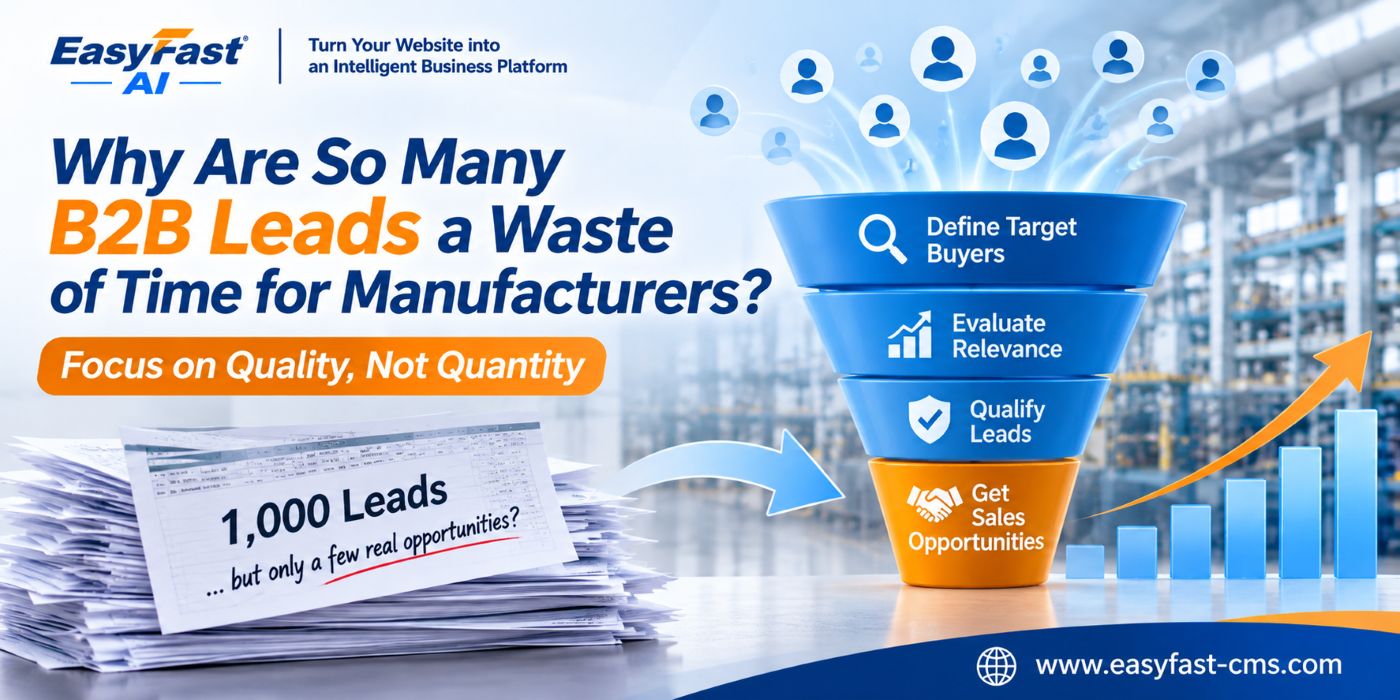
AI-powered B2B lead generation has moved beyond being a buzzword. It’s now a fundamental part of modern manufacturing marketing. In 2026, 35% of B2B buyers use AI platforms like ChatGPT Search, Perplexity, and Google AI Overviews to find suppliers. This shift highlights how structuring your AI marketing system determines your visibility in these searches.
Your website functions as a living document. With generative engine optimization (GEO) becoming prominent in 2026, content is not just what you create—but what AI selects to highlight. Real-world data indicates that manufacturers incorporating AI-powered B2B lead generation into their workflows experience a 42% faster response rate from potential buyers. These outcomes are measurable, not speculative.
Real-World Use Cases in Manufacturing
Industries such as automotive parts, industrial machinery, and electronics manufacturing have transformed through AI-powered B2B lead generation. In the automotive sector, companies analyze supply chain needs and production schedules to identify buyers. One German firm achieved a 30% rise in qualified leads within six months using Easyfast AI.
The system connected their local ERP data with global buyer intent signals from search engines. This ensures leads are aligned with actual demand. The workflow involves providing product and client data, while AI targets the right contacts with precision. It matches needs to offerings and generates content tailored to specific requirements.
Traditionally, lead generation relied on cold calls and trade shows. In 2026, this has evolved. AI now analyzes, sorts, and builds your lead list dynamically. If targeting the European industrial machinery market, the AI categorizes buyer profiles based on language, company size, and procurement cycles. This level of intelligence outperforms standard CRM or email tools in targeting accuracy.
Electronics manufacturers also see major benefits. One example reduced lead qualification time from days to minutes by integrating AI lead generation with production data. The AI scores leads using industry-specific metrics like lead volume, order frequency, and technical specifications. This personalization leads to meaningful results.
Note that no AI lead generation system is infallible. However, systems aligned with manufacturer data ecosystems and utilizing multilingual AI templates excel. The focus is on strategic scalability rather than a basic marketing tool.
Choosing the Right Overseas Market
How to select the ideal overseas market for your products is a crucial step. AI enables you to prioritize not just which markets, but how to approach them. Some regions are more receptive to AI-based discovery than others. You don’t guess—instead, you run simulations, examine growth trends, and interpret GEO signals for clarity.
Optimizing product pages for search is equally important. These pages form the foundation of your marketing strategy. SEO and AI work together to create content that answers real buyer questions. It’s not just about keywords—but about structuring pages to guide AI learning and adapt to emerging search trends.
Identifying the Right Contact at Target Companies
AI simplifies the process of finding the correct contact at a target company. It automatically extracts decision-makers from business data, streamlining outreach efforts. For manufacturers, knowing the right person to email is transformative. The AI constructs a contact map, filters by role, and tailors emails to local communication norms. This strategy enhances relevance and reduces wasted effort.
Integrating AI with ERP Systems
This integration is crucial for effective lead generation. ERP platforms like SAP and Oracle are standard in manufacturing, but compatibility with AI tools varies. Cross-platform integration remains a key differentiator for modern B2B marketing systems.
For instance, Easyfast AI was integrated with an SAP platform managing hundreds of thousands of product records. The system accessed real-time data via API, pulling in production metrics and customer orders. This allows the AI to match buyer signals with your inventory instantly, eliminating the need for manual reporting.
Oracle systems also benefit from AI integration, with a 22% improvement in efficiency. However, alignment of data strategies is essential. Many companies attempt to force AI into their systems without adapting the data to AI’s requirements. This is a common pitfall—akin to trying to fit a square peg into a round hole.
Data synchronization occurs through two methods: real-time API or batch processing. Real-time updates offer faster lead capture, while batch processing suits larger systems. The choice depends on your operational pace and data complexity.

Local manufacturing ERPs often lag behind. Outdated structures can hinder AI performance. But with proper data mapping, regional systems can be optimized. The key is presenting product data in a format AI can interpret—using clear parameters, intent triggers, and lead scoring algorithms.
Enterprise knowledge base alignment is central to this process. The AI requires data in a standard format for accurate predictions. Users don’t need data science expertise; organizing product pages, client profiles, and market insights suffices. The more detailed the data, the better the AI performs.
Not all ERPs are equally integrated with AI. Some support API access and structured querying better than others. The focus is on adaptive AI compatibility rather than data volume alone. Manufacturers in the EU saw a 18% lead conversion increase after AI-ERP integration, while Asian manufacturers using global marketing frameworks increased lead volume by 25%.
AI tools apply predictive analytics to identify high-value leads. They assess order frequency, market expansion pace, and decision thresholds. This approach is tailored to manufacturing timelines and supply chain dynamics, offering nuanced targeting over generic scoring.
AI Algorithm Architectures for Lead Generation
The choice of AI framework significantly impacts lead generation outcomes. Some excel at specific tasks, while others offer broader capabilities. For AI-driven B2B lead generation, hybrid models are gaining traction. They combine neural networks' pattern recognition with decision trees’ clarity.
Neural networks are ideal for pattern recognition in complex buyer behavior and long-tail queries. Decision trees provide transparency and ease of adjustment. In 2026, many manufacturers adopt hybrid models to leverage both strengths effectively.
NLP plays a central role for industrial machinery companies. These firms rely on technical documents, brochures, and engineering standards. AI needs to understand these materials to generate accurate leads. This is where GEO optimization becomes essential.
The AI goes beyond keyword scanning, interpreting buyer intent as it happens. For example, if a buyer searches for “sustainable materials for automotive racing parts,” the AI maps this to product details, SEO strategies, and multilingual marketing strengths in real-time.
Basic AI tools for lead scoring lack scalability. The most effective systems use predictive analytics for real-time decisions. They analyze purchasing patterns, market changes, and competitor activities. This goes beyond sales—it’s about timing and context.
Dynamic parameter tuning allows AI models to adapt to market shifts. If a region experiences economic changes, the AI adjusts lead scoring algorithms accordingly. This reflects the evolving nature of smart marketing in 2026.
A strong data foundation ensures AI lead generation operates as intended. Fragmented or outdated product data leads to inaccurate targeting. Precision and adaptability are key to leveraging AI’s full potential.
Despite progress, some systems lack real-time capabilities. They fail to support global strategies and overlook the value of multiphase SEO and GEO optimization. The right AI marketing system addresses these gaps effectively.
Manufacturers use these solutions because they yield tangible benefits. They streamline lead qualification, boost conversion rates, and enhance engagement globally. The next step is to act on this knowledge, supported by data in 2026.
- AI-powered B2B lead generation helps manufacturers grow 30% faster than traditional methods
- Integration with ERP systems can reduce lead qualification time by up to 50%
- Manufacturers optimizing for 16 languages see a 25% lead volume increase in key markets
- Dynamic AI scoring models adapt to changing market conditions
- GEO optimization ensures your brand appears in AI-driven search results
"The future of B2B marketing involves letting AI guide your brand to the right audience at the right moment." — Industry analyst, 2026
| System | Integration Speed | Data Synchronization Method | Average Lead Quality Score |
|---|---|---|---|
| SAP | Real-time | API-based | 4.8/5.0 |
| Oracle | High-speed | API or batch | 4.6/5.0 |
| Local Manufacturing ERP | Medium-speed | Batch process | 3.9/5.0 |
Each system has unique performance characteristics. The key is mapping your data to AI’s logic effectively. This involves more than building a website—it’s about creating a lead funnel AI can engage with seamlessly.
AI-powered B2B lead generation has evolved significantly. The more data you provide, the more accurate the targeting becomes. Expanding language support unlocks new markets. This is where manufacturers gain a reliable edge in 2026.
As you consider this shift, you might ask: How do we ensure practical results? These approaches are already in use and being refined through user feedback, market data, and real-world application. Your path forward is supported by measurable improvements in global operations.
What’s your next move? Identify an AI marketing system that aligns with your enterprise knowledge base and enables multilingual lead targeting. This represents the core value of AI-driven B2B lead generation in 2026.