A Manufacturer's Website Is Part of the Supplier Evaluation Process
When an overseas buyer considers a new manufacturer, the evaluation process often begins before the first email is sent.
Buyers may receive a company introduction through a referral, discover a supplier through a search engine, or find a product while researching a particular application. Before starting a conversation, they can visit the manufacturer's website to understand what the company offers and whether it is relevant to their requirements.
This makes a manufacturer's website more than an online company profile. It becomes one of the information sources buyers use during supplier evaluation.
The First Questions Buyers Need to Answer
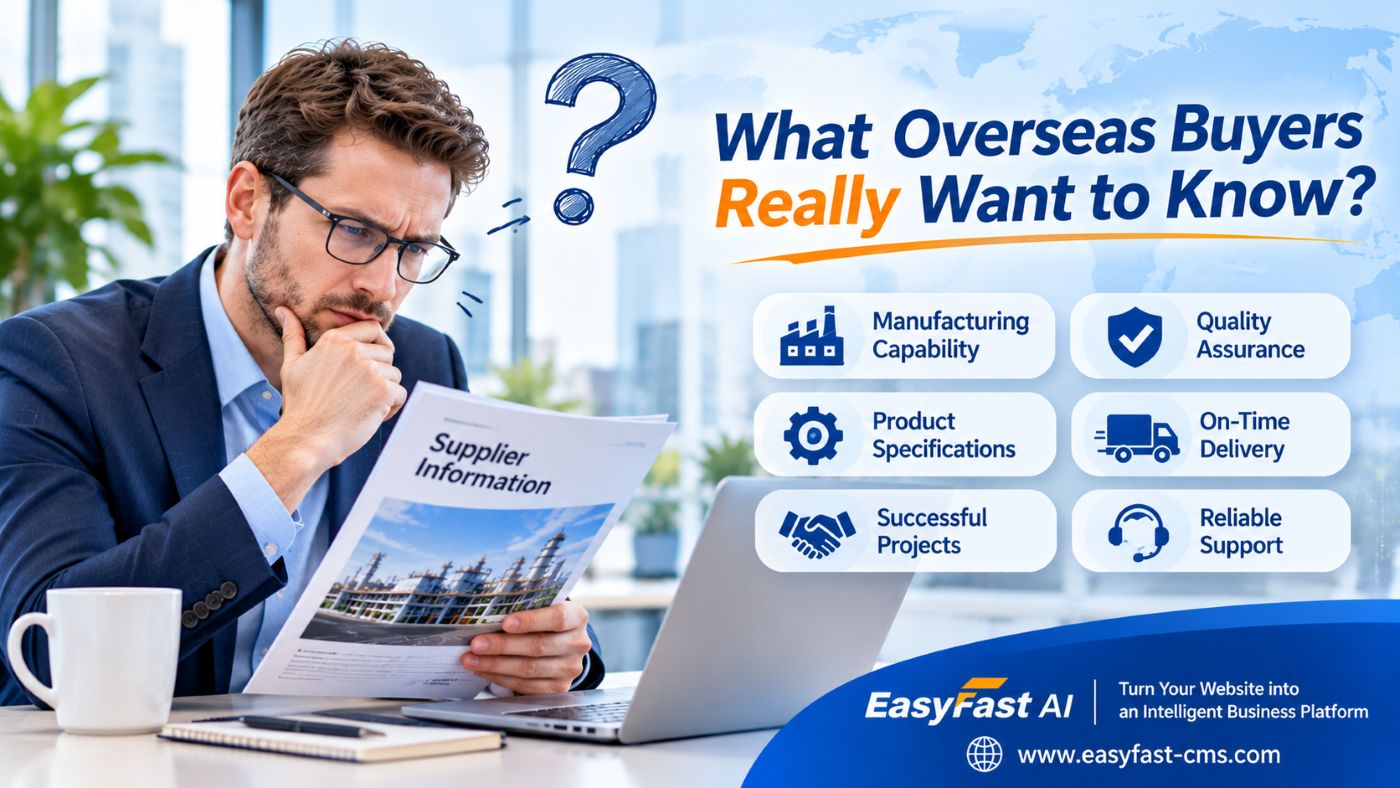
A buyer visiting a manufacturer's website is usually looking for specific information. The exact questions depend on the product and industry, but several areas are common.
1. Does the manufacturer offer the required product?
Product categories and general descriptions are useful starting points, but buyers often need more detail. They may want to check product models, specifications, materials, dimensions, performance parameters, and available configurations.
If the website only contains a few product photographs and short descriptions, buyers may not have enough information to determine whether the supplier is relevant.
2. Can the manufacturer support the intended application?
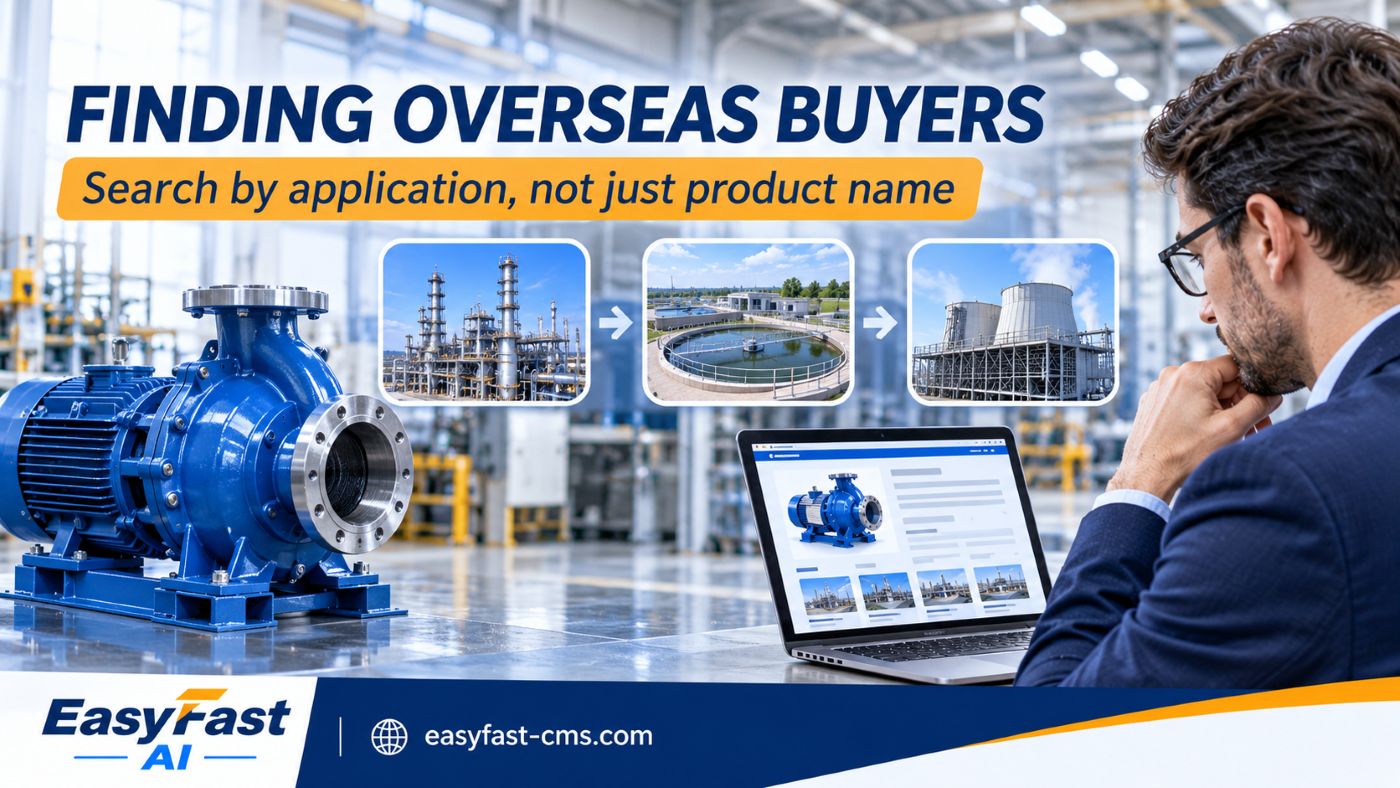
The same product may be used in different industries or operating environments. Buyers therefore need to understand where a product can be applied and whether the manufacturer has experience with similar requirements.
Application descriptions, project references, technical explanations, and relevant product documentation can help provide this context.
3. What can the company actually manufacture?
A manufacturer's capabilities are not always clear from its product catalogue. Buyers may also look for information about production equipment, manufacturing processes, quality control, customization, and technical support.
These details help buyers distinguish between a manufacturer, a trading company, and other types of suppliers. Companies should describe their actual capabilities accurately rather than rely on broad claims.
Information That Helps Buyers Evaluate a Supplier
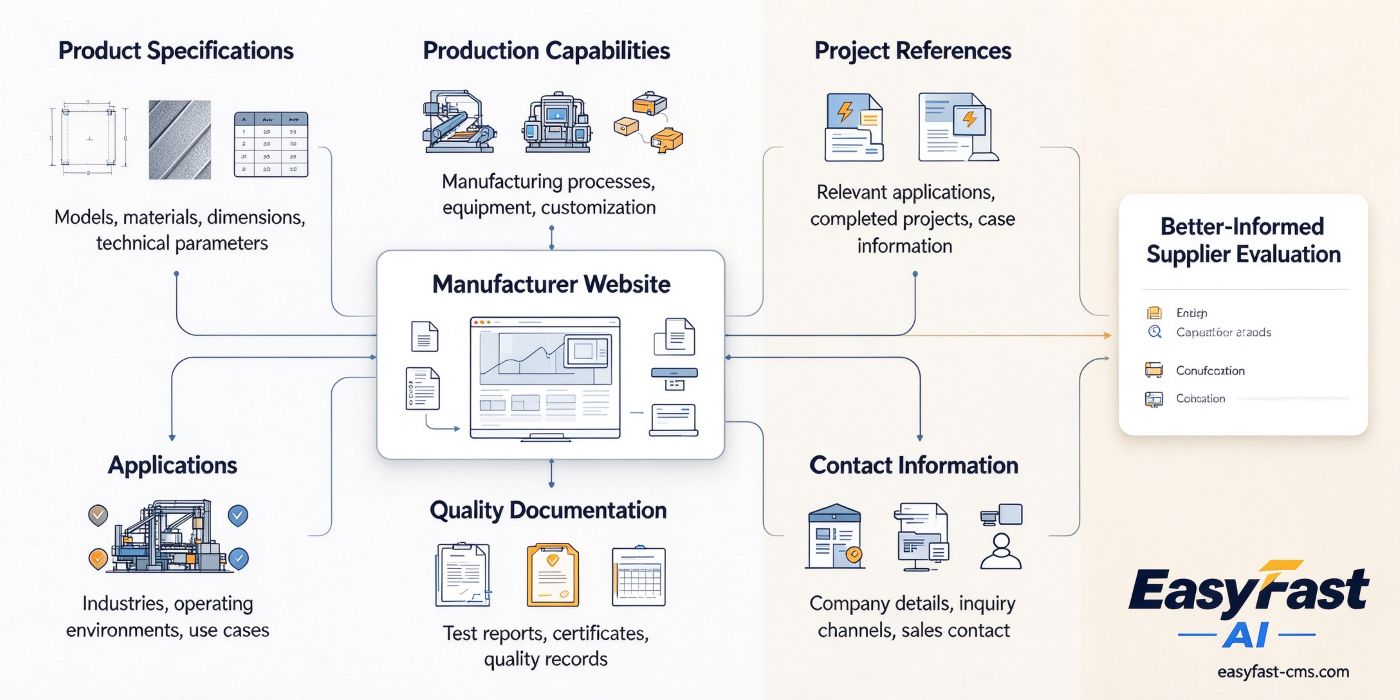
A useful manufacturing website should make important business and product information easy to find. The following table provides a practical reference.
| Website information | What buyers can understand |
|---|---|
| Product specifications | Whether the product matches technical requirements |
| Applications and industries | Whether the product is relevant to the intended use |
| Factory and production information | What manufacturing resources and processes are available |
| Quality documents and certifications | Which documented standards or qualifications the company holds |
| Case studies and project references | Whether the company has relevant project experience |
| Contact information | How to reach the company and continue the discussion |
Not every manufacturer needs to publish every type of information. The appropriate content depends on the product, target market, industry requirements, and what the company can verify.
When Important Information Is Missing
A website does not need to answer every possible question before a buyer makes contact. However, missing information can make the initial evaluation more difficult.
For example, consider a buyer comparing two suppliers of industrial equipment. One website provides model information, technical specifications, application descriptions, and downloadable product documents. The other only displays a product catalogue with brief descriptions.
The first website gives the buyer more material to review independently. The second may require additional emails just to establish basic product suitability.
This does not automatically mean the first supplier will receive the order. Price, quality, delivery capability, communication, and other commercial factors still matter. But the availability of clear information can make the early evaluation process more straightforward.
Consistency Matters Across Every Contact Point
Buyers may encounter a manufacturer through Google search results, LinkedIn, an industry directory, an email introduction, or a distributor. They may then visit the official website to verify what they have seen.
If product names, company descriptions, specifications, or contact details differ across these sources, buyers may need to spend additional time checking which information is current.
Manufacturers should therefore maintain a consistent source of verified company and product information. Website pages, product documents, sales emails, and social media descriptions should be based on the same approved information.
A Website Should Support the Buying Process
For manufacturing companies selling internationally, a website should be planned around the questions buyers are likely to ask—not only around the information the company wants to display.
This requires more than publishing a homepage and uploading a product catalogue. Product pages need sufficient technical detail. Application pages should explain relevant use cases. Company pages should describe verifiable manufacturing capabilities. Downloadable documents should provide useful supporting information, and contact paths should be easy to identify.
It is also important to maintain this information as products, capabilities, and target markets change.
A manufacturer's website cannot replace technical discussions, sample testing, factory audits, or commercial negotiations. Its role is to provide accessible and consistent information that helps buyers understand the supplier before and during those conversations.
Before Your Next Overseas Buyer Visits
Review your website from the perspective of someone who has never worked with your company before.
- Can a buyer identify your main products within a short visit?
- Are important specifications and product documents available?
- Can visitors understand your actual manufacturing capabilities?
- Are applications and relevant project references explained?
- Are your company details and contact information consistent?
- Can buyers easily make an inquiry about a specific product?
If these questions are difficult to answer, the website may need more than a visual redesign. It may need a clearer information structure and more complete product and company content.
For an overseas buyer, the website is often one of the first opportunities to understand a potential supplier. The information presented there can shape the questions they ask—and whether they decide to start a conversation.