Can AI Search Understand What Your Manufacturing Company Actually Does?
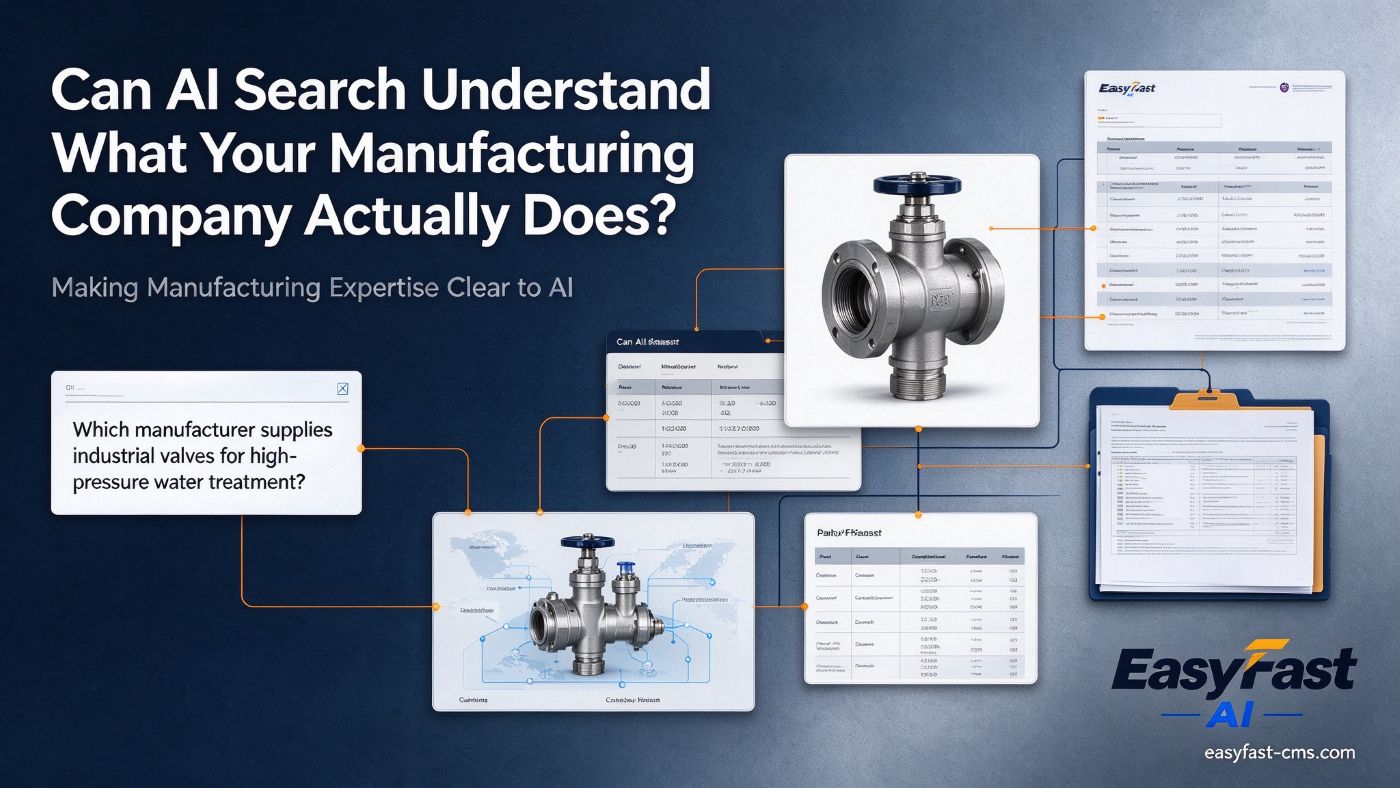
Imagine an overseas buyer asking an AI assistant:
"Can you recommend a manufacturer of industrial valves for high-pressure water treatment applications?"
The buyer is not simply searching for a company name. The question contains several requirements: a product category, an operating environment, and a particular application.
For an AI search system to identify potentially relevant manufacturers, it needs information that explains what each company produces, which applications its products support, and what technical capabilities the company can actually demonstrate.
This raises an important question for manufacturers: can AI search systems understand what your company really does from the information available online?
A Company Name Is Not a Complete Business Description
A typical manufacturing website may describe a company as an industrial equipment supplier, a professional manufacturer, or an exporter of mechanical products.
These descriptions identify a general business category, but they may not explain enough about the company's actual products and capabilities.
Consider two descriptions:
General description:
"We are a manufacturer of industrial equipment, providing reliable products and professional services to customers worldwide."
More specific description:
"We manufacture stainless steel industrial valves for water treatment, chemical processing, and general industrial pipeline systems. Our product range includes several valve types with different connection options, pressure ratings, and material configurations."
The second description provides more identifiable information about products, materials, and applications. It gives both human readers and information retrieval systems more context to work with.
Manufacturers should describe their actual business in concrete terms rather than rely entirely on broad promotional language.
AI Needs to Understand the Relationship Between Products and Applications
Knowing that a company manufactures pumps, valves, motors, or filtration equipment is only a starting point.
Industrial buyers often search according to the problem they need to solve. They may describe an operating environment, a production process, a material requirement, or a technical specification rather than use the manufacturer's internal product category.
For example, a manufacturer might sell a particular type of industrial pump. Its website should explain more than the product name. Relevant information may include:
- The intended operating conditions.
- The types of liquids or materials the equipment is designed to handle.
- Available materials and configurations.
- Technical parameters and operating limitations.
- Industries and applications where the product is used.
These relationships help explain why a product exists and where it may be relevant. They also provide context for matching product information with more specific buyer questions.
Technical Information Should Be Connected, Not Scattered
Manufacturing information is often distributed across different parts of a website.
Product models appear in a catalogue. Technical specifications are placed in downloadable PDFs. Applications are mentioned in blog articles. Manufacturing capabilities are described on the company profile page.
Each page may contain useful information, but the relationship between these details can be difficult to understand if they are not organized consistently.
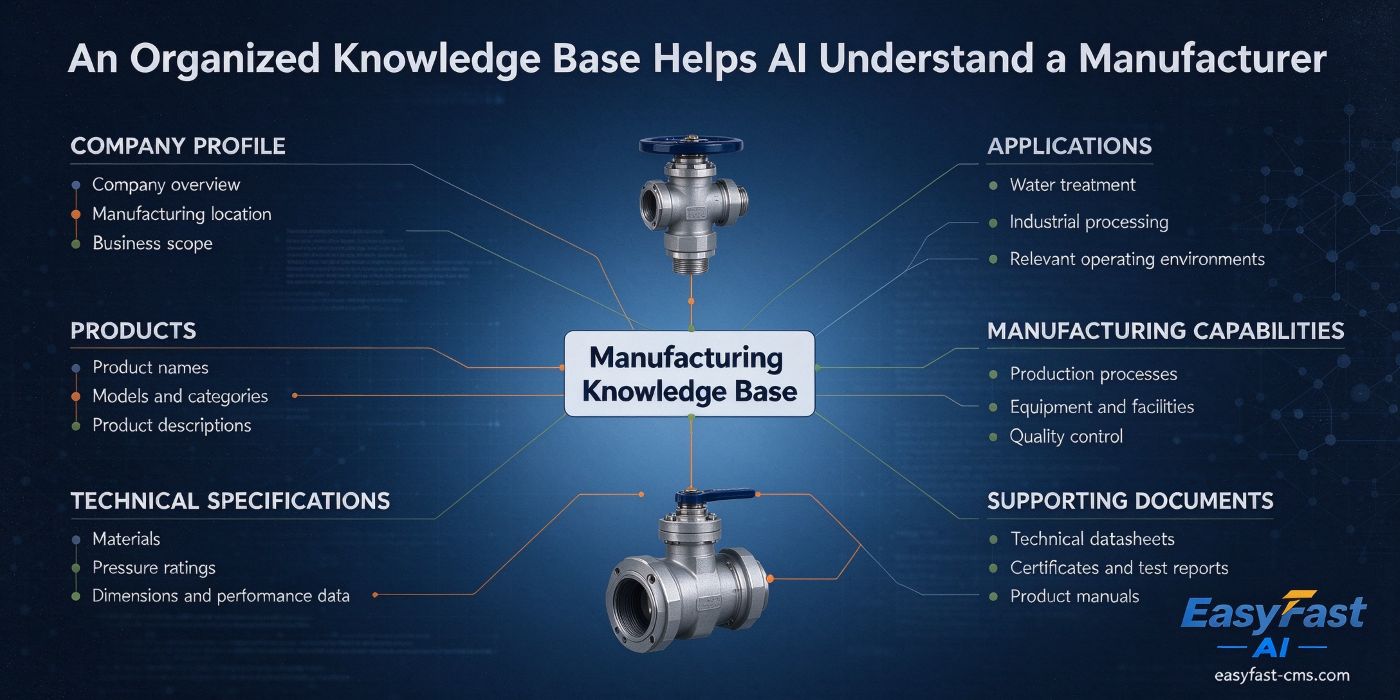
A more coherent information structure connects the relevant details:
| Information category | Relationship to explain |
|---|---|
| Company profile | Who manufactures the product? |
| Product information | What products and models are available? |
| Technical specifications | What are the product's verified parameters and limitations? |
| Applications | Where and under what conditions is the product used? |
| Manufacturing capabilities | What processes, customization, and production capabilities are available? |
| Supporting documents | Which technical records and documents support the information? |
When these pages refer to the same products, models, and applications using consistent terminology, the website provides a more connected description of the business.
Specific Facts Matter More Than Repeated Marketing Claims
AI search optimization is not simply a matter of adding phrases such as "AI-friendly content" or repeating a target keyword throughout an article.
For a manufacturing company, useful information often consists of facts that can be checked:
- Product models and specifications.
- Materials and manufacturing processes.
- Available production capabilities.
- Documented certifications and test reports.
- Actual application examples.
- Technical limitations and customization conditions.
If a company claims to manufacture a product but provides no meaningful product information, the description remains difficult to verify.
Likewise, if an article discusses an application without explaining which products or technical capabilities are relevant, it may provide limited context about the manufacturer.
Content should be based on accurate company and product information. AI-generated descriptions should not invent specifications, certifications, customer projects, or manufacturing capabilities.
Structured Data Helps Describe What a Page Contains
Structured data is another part of the technical foundation. Using appropriate schema.org vocabulary, a website can provide machine-readable descriptions of entities such as organizations, products, and articles.
For example, product-related markup may identify a product name, brand, model, or other supported attributes. Organization markup can describe the company behind the website.
However, structured data is not a shortcut to AI recommendations. It should accurately reflect the visible page content and work alongside clear writing, accessible pages, and consistent company information.
Build a Consistent Knowledge Source for Your Website
One practical approach is to maintain a centralized source of verified company information.
This can include company background, product catalogues, technical specifications, manufacturing capabilities, applications, certifications, and frequently asked questions.
When new product pages, articles, FAQs, or multilingual descriptions are created, they can draw on this approved information rather than relying on disconnected content sources.
This also makes it easier to review updates. If a product specification changes, the company can identify which related pages and documents may need revision.
For manufacturers with many products and multiple language versions, consistent knowledge management is particularly important.
Can AI Understand Your Company Today?
Try asking an AI search assistant several questions about your business:
- What products does this manufacturer actually make?
- Which industries and applications are its products designed for?
- What technical specifications can be verified?
- What manufacturing capabilities does the company describe?
- Which product would be relevant to a particular application?
Then compare the answers with the information published on your official website.
If the answers are incomplete or inaccurate, investigate whether the relevant information is missing, difficult to access, inconsistent, or insufficiently explained. AI answers can also contain errors, so this exercise is a diagnostic reference rather than proof of how every AI system interprets your company.
AI Search Starts with Understanding the Business
For manufacturing companies, GEO is not simply another content publishing activity. It begins with making the business understandable through accurate, connected, and accessible information.
A clear company profile, detailed product pages, relevant application explanations, technical documentation, and consistent structured data all contribute to that foundation.
No website structure or content strategy can guarantee that an AI assistant will mention or recommend a particular supplier. But manufacturers can take practical steps to make their products, capabilities, and business information easier to identify and interpret.
Before asking how to appear in AI search results, start with a more fundamental question: does your website clearly explain what your company actually makes, what it can do, and where its products are used?


