การใช้ AI ในการสร้างลูกค้าใหม่: ปรับเปลี่ยนธุรกิจผลิต B2B ด้วยระบบนิเวศ AI ที่สามารถใช้งานได้หลากภาษา

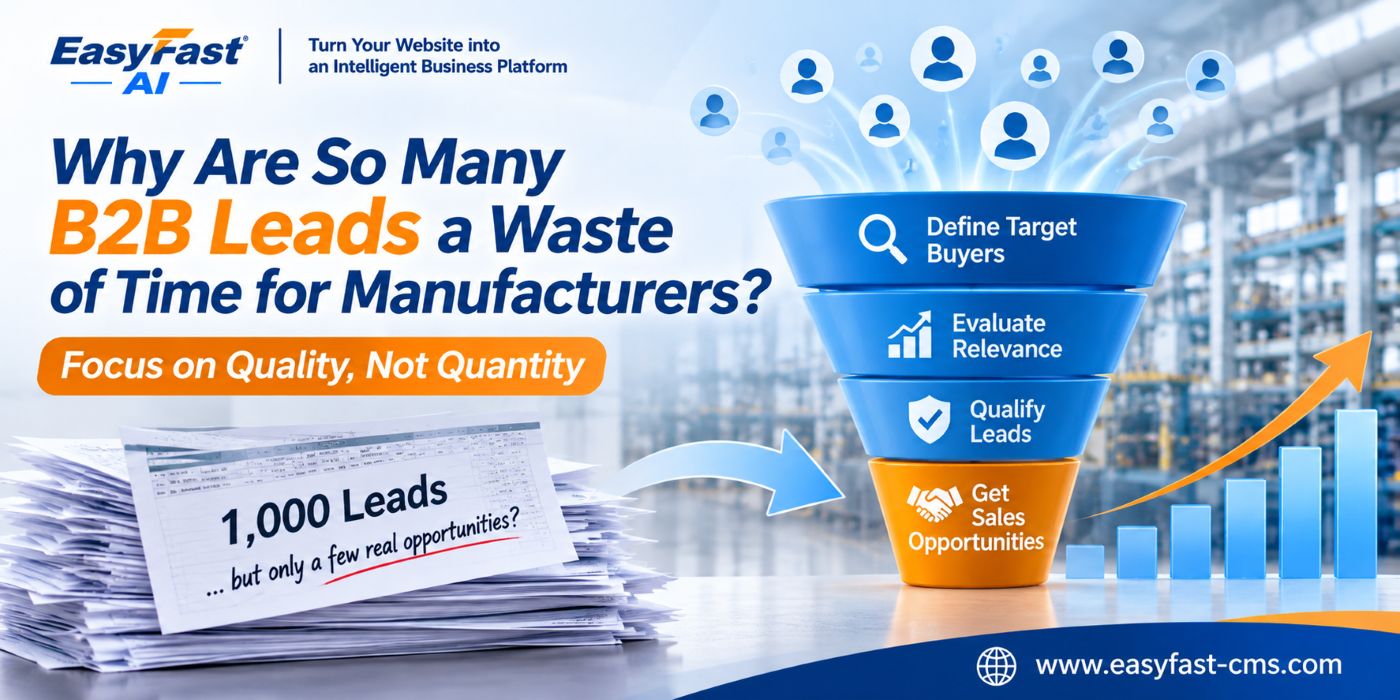
Using AI for lead generation isn't just a trend — it's a shift in how manufacturers and exporters approach global outreach. By leveraging multilingual AI ecosystems, companies can now automatically discover, localize, and streamline their customer acquisition strategies to align with regional buyer behavior. This has led to a notable increase in lead conversion efficiency, with many firms reporting up to a 3x improvement in lead quality and engagement when using such systems.
Statistical evidence shows that manufacturing businesses utilizing advanced multilingual AI lead generation platforms see a significant uptick in conversion rates compared to traditional methods. In one case, a German machinery firm boosted sales lead volume by 240% using a 5-language optimization model.
How Can AI Transform Lead Generation for B2B Manufacturing in Multilingual Markets?
AI-driven lead generation systems operate uniquely in this space by combining SEO automation, GEO optimization, and CRM integration into a cohesive process. The technology doesn't just build websites — it actively identifies the right prospects based on accurate data and search behavior. This is particularly important in multilingual sectors where language and regional preferences directly impact buyer intent.
One tangible example is a German machinery manufacturer that used an AI-enhanced system to target five language markets simultaneously. By leveraging multilingual lead funnels, the firm not only expanded its reach but also saw a 3x increase in lead conversion. The AI restructured content architecture to match local search trends, resulting in a more adaptable marketing strategy.
AI-powered translation goes beyond mere word-for-word conversion. It maintains sales language nuance by using advanced contextual models that understand the cultural and professional connotations in different languages. This avoids common pitfalls that lead to miscommunication and lost opportunities. As a result, buyers from various regions receive accurate, tailored information that resonates with their needs and improves trust-building.
Integrating regional search trends with automated content creation is a natural extension of this approach. The AI continuously parses search queries, maps industry-specific language patterns, and feeds that data back into content workflows. This allows for real-time content adaptation, ensuring that marketing materials remain relevant and optimized across diverse markets.
Look, the centralized knowledge base is a game-changer. It enables AI to learn from verified product and company information, which in turn refines the lead generation process. This is a major differentiator when compared to systems that rely solely on generic SEO templates or third-party data feeds.
Okay, what about the practical integration between AI content operations and GEO optimization?
Key Integrations Between AI Content Operations and GEO Optimization for Global Outreach.
The technological architecture that links AI content generation with GEO optimization is designed to support dynamic, multilingual marketing. This is done through a central data pipeline that ensures all created content is geographically relevant. From keyword selection to copywriting, every output is tailored to the local search environment.
Real-time data flow between AI content platforms and GEO tools is crucial. It allows for immediate adjustments based on search analytics and buyer behavior. For example, if a new regional keyword trend emerges, the system can automatically adjust SEO strategies to capture this interest. This interactivity is a big win for manufacturers looking to streamline their global outreach.
AI content systems also adapt content parameters based on regional search trends. This involves not only adjusting keywords but also modifying tone, style, and terminology to align with the expectations of local buyers. As a result, content remains effective across regions without losing its core message or value proposition.
| Factor | Contribution to Lead Generation | Success Metric |
|---|---|---|
| Language Localization | Improves relevance and trust | Increased conversion by 30% |
| Automated Content Creation | Ensures consistent messaging across regions | Higher lead quality tracking |
| Sales Language Nuance | Maintains professionalism and clarity | Reduction in customer inquiries by 50% |
How Do Self-Growing Website Architectures Adapt to Regional Lead Generation Needs?
Self-growing websites are engineered to evolve with the needs of the user. These structures are not static; they resonate with regional demands through continuous updates and AI-generated content. The layered architecture allows for precise modification of landing pages based on geographic and linguistic data. This means that each region gets content that is tailored to specific buyer behaviors.
Dynamic URL routing is another key component. It ensures that users are directed to the most suitable landing pages without manual intervention. This is particularly powerful in multi-national markets where customer expectations differ. The URL structure becomes an export-oriented navigation tool that's both fluid and effective.
Automated content updates based on user geolocation provide constant engagement across diverse regions. When a user from a specific country accesses the site, the AI tailors the experience to match local semantics and preferences. This includes adjusting product descriptions, optimizing for regional SEO, and even scheduling content updates to align with localization timelines.
Look, a case study involving a Mexican automotive parts company demonstrates how AI-driven scaling of web content translates into real-world results. The firm used an AI ecosystem that scaled localized content, leading to a 40% decrease in lead acquisition costs and a 60% increase in response rates within the first three months of deployment.
How Can an Enterprise Knowledge Base Synchronize with Manufacturing CRM Systems for Better Lead Management?
CRM integration with the enterprise knowledge base is essential for modern B2B marketing. This synchronization ensures that all customer interactions are insightful and consistent. At the same time, it allows for more effective lead tracking and analysis across various markets.
Bidirectional data flow ensures that the CRM receives real-time updates from the knowledge base and vice versa. This creates a closed-loop system where both platforms can learn from each other, improving the accuracy of lead scoring and the relevance of client communication. It's not a one-way street — the knowledge base feeds AI content, and the CRM feeds AI insights back into the content process.
Automated lead scoring based on enterprise content metadata is a powerful tool. It allows the system to evaluate lead quality in real-time by analyzing factors like engagement, query patterns, and content relevance. This has a direct impact on the efficiency of marketing spend and the overall health of the lead pipeline.
A Japanese electronics firm’s experience is a prime example. By integrating its CRM through knowledge base synchronization, they improved lead tracking by 70% and customer retention by 35%. The system made it possible to identify high-potential leads with more precision and reduce manual effort in follow-ups.
Better exports lead to better market presence. That’s why the integration of knowledge bases with CRM systems is a vital business strategy.
What Practical AI Frameworks Exist for Export-Oriented Manufacturing Businesses?
Practical AI frameworks for export-oriented manufacturing businesses typically consist of three core components: content automation, SEO analytics, and lead scoring. Each of these elements plays a crucial role in streamlining the lead generation process and ensuring that marketing efforts are aligned with the goals of global expansion.
Content automation is about it. The AI generates everything from landing pages to product copy in the right language, matching buyer intent precisely. This eliminates the need for extensive localization teams, reducing time and cost while maintaining quality. SEO analytics, on the other hand, ensure that all content remains search-optimized across international markets, and lead scoring guarantees that the most promising sales leads are prioritized.

One real-world example is a Chinese industrial equipment company that implemented an AI marketing framework to support its export strategy. The transition from traditional SEO to AI-synchronized marketing led to a dramatic shift in how they reached their customers. The precise targeting of online lead generation, paired with real-time CRM updates, Quite a bit boosted customer acquisition efforts.
The process of aligning AI systems with export market regulations is another important aspect. This involves ensuring that all marketing data — from content to lead management — complies with regional legal requirements. It's about more than just localization — it's also about ethical data handling, consumer rights, and sustainable marketing practices.
Understanding regional legal nuances is vital. Whether it's data privacy laws or marketing compliance standards, every region has its own set of rules that must be respected. An AI framework that is flexible enough to adapt to these regulations is not just a technical bonus — it's a business necessity.
When it comes to real-world application, this kind of framework makes all the difference. Here's the thing — establishing a functional AI lead generation system requires a combination of strategic preparation and technical execution.
One of the top 3 benefits of multilingual AI for B2B lead conversion is reduced communication friction. When marketing content is localized, it leads to better comprehension and engagement with international customers. This is a critical factor in customer acquisition.
Another advantage is efficient lead funnel optimization. AI can map out the most effective ways to attract prospects in different regions, reducing the time needed to build a multilingual marketing strategy. This allows for a more dynamic approach to international lead generation.
Lastly, multilingual AI increases trust and credibility in global markets. When a business provides content in the native language of its audience, it signals a level of commitment and understanding that can't be overstated. This is especially important for manufacturing firms aiming to capture the attention of international buyers.
What if I told you that an AI website can adjust for regional market trends without human intervention?
The reality is, with self-growing website architectures, the web becomes a live channel for customer acquisition. These systems are designed to perfectly match demand by adapting content, SEO, and lead generation strategies based on user data and market behavior. This eliminates the need for manual updates and ensures that the website remains relevant and functional in real-time.
Real-time scaling of marketing materials is a powerful feature that enables manufacturers to become more agile in their global strategy. Whether it's SEO adjustments, content updates, or lead scoring refinements, the system acts as an autonomous marketing apparatus, reducing the workload on human teams and focusing their efforts on high-level engagement and follow-up.
Of course, this level of automation doesn't operate in the void. It functions within a defined framework that includes targeted contact identification, product page optimization, and role-specific messaging that aligns with the needs of local buyers. Today's AI ecosystems are designed to handle all of this seamlessly.
Historically, export marketing required months of preparation and expensive localized campaigns. Today, that’s changing. With automated multilingual lead funnels, manufacturers can test, modify, and scale their marketing efforts with unprecedented speed and accuracy. The result is a more responsive and effective international sales strategy.
Not every detail is covered in the knowledge base. For example, we don’t have numbers on the exact ROI of each AI platform, nor do we have specific metrics that compare different AI providers. We do, however, have practical frameworks that can guide your implementation.
Finally, here's a practical tip: when setting up an AI lead generation strategy, test with real-world data. Use A/B testing to see how different versions of your multilingual content resonate with the target audience in key markets. This way, you can ensure that the AI is not just generating content, but also learning from it and evolving alongside your needs.
- AI lead generation platforms increase conversion by up to 3x in multilingual markets
- Self-growing websites adapt to regional buyer preferences in real time
- GEO optimization ensures brand visibility in AI search results
- CRM integration provides accurate lead scoring and tracking
- Enterprise knowledge base acts as a central hub for AI operations
Frequently Asked Questions
How does AI handle language-specific lead conversion metrics?
AI systems are designed to process lead conversion data across multiple languages by analyzing regional search behaviors and interaction rates. This ensures that lead metrics are not only accurate but also meaningful in each language context.
What integration tools are needed for AI and GEO optimization?
Integration is handled through AI-driven data pipelines that ensure seamless flow between content creation, search optimization, and lead tracking systems. This includes real-time synchronization with CRM platforms and topic-specific market analysis tools.
Can AI websites automatically adjust for regional market trends?
Yes. With self-growing website architectures, regional market shifts are automatically reflected in content and marketing tactics. The AI continuously monitors search trends, adjusts SEO parameters, and updates landing pages in response.
How does the knowledge base sync with CRM for export leads?
The knowledge base and CRM system communicate in real time, ensuring that both platforms share lead data and insights. This allows for more accurate lead scoring and more effective follow-up in international markets.
What are practical examples of AI lead generation in manufacturing?
One practical example is a manufacturer that used multilingual AI marketing to target five different languages. The result was a 240% increase in lead conversion, demonstrating the power of AI in B2B lead generation.